

12 Mind-Blowing Mobula Ray Facts: The Flying Acrobats of Cabo San Lucas
Julia EvansJune 22, 2026Los Cabos
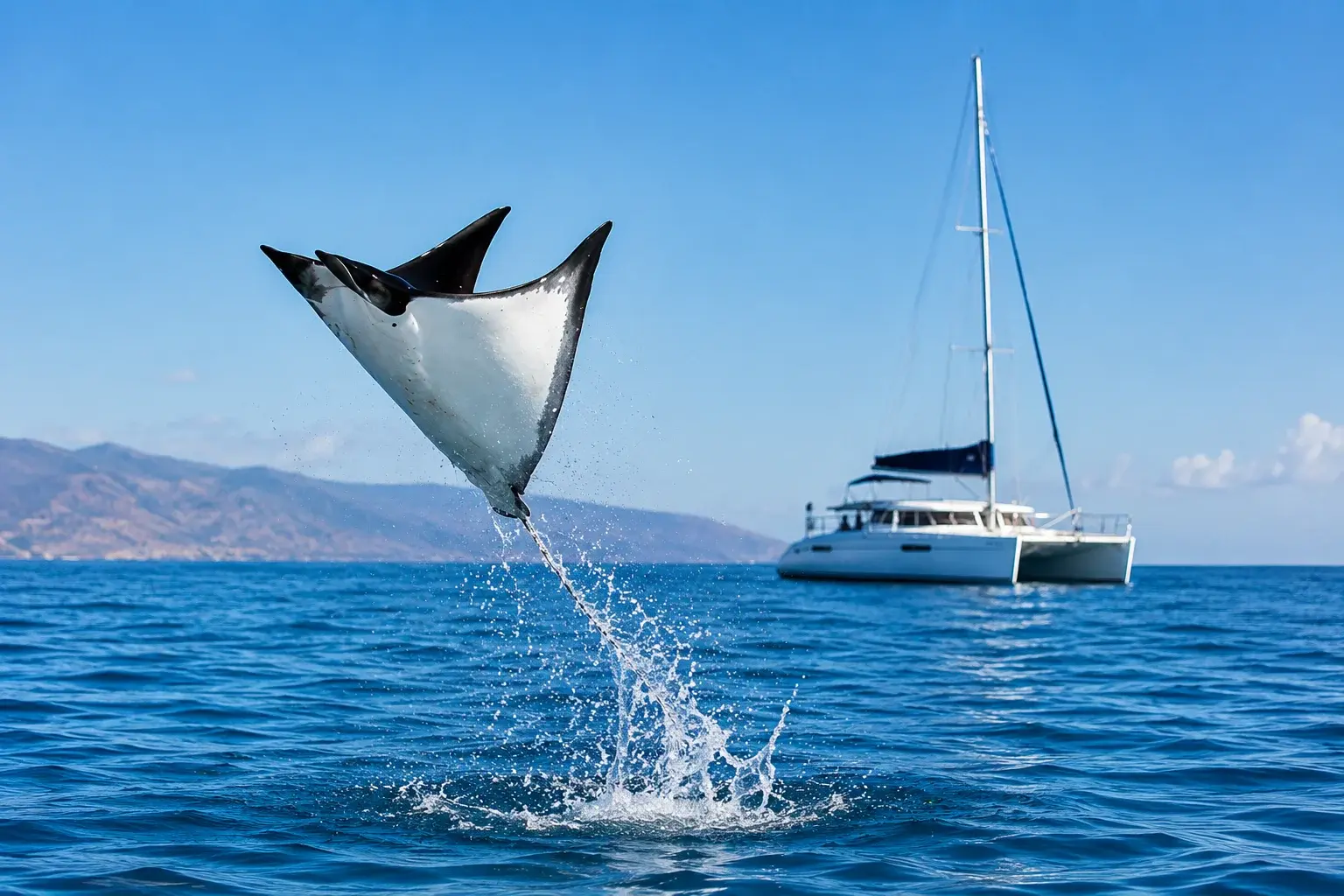
Picture this. You're cruising out of the marina on a crisp Baja morning. The sun barely peeks over Land's End, casting a golden glow across the water. Suddenly, the ocean surface erupts.
A sleek, silver shape launches six feet into the air, its wings flapping frantically before crashing down with a resounding smack. Then, another jumps. Followed by a dozen more.
Within minutes, the entire horizon looks like boiling water. You've just witnessed the mobula ray migration. Experiencing this wild marine spectacle ranks at the very top of the best things to do in Cabo San Lucas.
Every spring and summer, tens of thousands of these majestic creatures congregate in the Sea of Cortez. If you're visiting Los Cabos, catching this natural phenomenon from the deck of a private boat is an absolute must.
But what exactly drives these massive schools to take flight? Let’s break down the science, the behavior, and our top captain’s tips for spotting these incredible ocean acrobats.
What is a Mobula Ray?
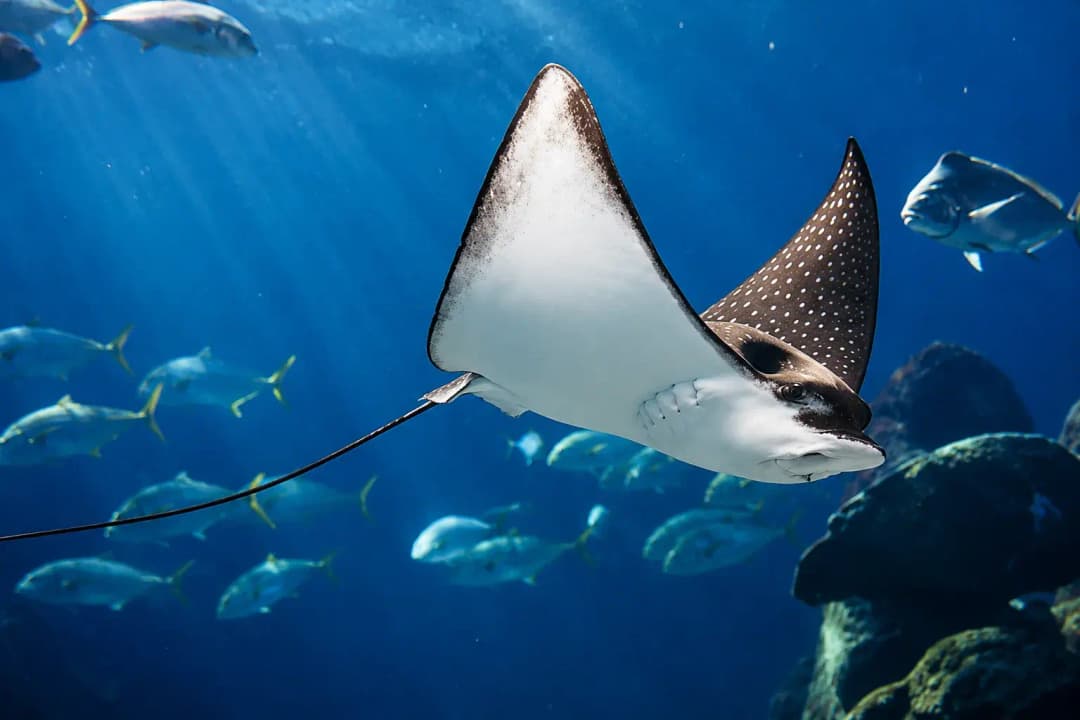
A mobula ray is a pelagic, cartilaginous marine fish closely related to manta rays and sharks. Characterized by wide, wing-like pectoral fins and horn-like cephalic lobes near their mouths, these filter-feeders migrate globally in tropical oceans. They are widely famous for leaping several feet above the water's surface.
Often referred to as "flying rays" or "devil rays," these creatures are built for endless swimming. Unlike bottom-feeding stingrays that camouflage themselves in the sand, mobulas live entirely in the open ocean.
Their bodies are perfectly streamlined. Dark blue or black on top to blend in with the deep water, and bright white underneath to camouflage against the sunlit surface. This dual-tone armor keeps them safe from predators like orcas and large sharks.
12 Incredible Facts About Cabo’s Devil Rays
Want to impress your crew on your next boat charter? Keep these mobula ray facts ready.
1. They Can Launch Over 6 Feet in the Air
If you are wondering exactly how high can a mobula ray jump, prepare to be amazed. These rays can launch themselves up to six, sometimes even nine feet above the water.
They generate massive bursts of speed underwater. By angling their bodies upward at the last second, they breach the surface with explosive power. The visual is stunning, but the loud slapping sound they make upon reentry is what truly grabs your attention.
2. They Gather in Tens of Thousands in Cabo
The mobula ray migration Baja California experiences is one of the largest marine aggregations on the planet. The nutrient-rich currents of the Sea of Cortez act like a massive buffet funnel.
During peak season, you won't just see one or two. You will see entire "fevers" (the official term for a group of rays) numbering in the tens of thousands. They form giant, swirling underwater tornados that stretch as far as the eye can see.
3. Stingray vs. Mobula Ray: What’s the Difference?
This is the most common question we hear on our charters. The difference between stingray and mobula ray anatomy is clear once you know what to look for.
Stingrays are bottom-dwellers with venomous barbs on their tails used for defense. Mobula rays, however, are open-ocean swimmers. Most mobula species completely lack a stinging spine. Even the rare species that possess a vestigial spine do not use it for defense. You can swim near them without fear.
4. The Belly Flop is Actually Communication
Why do they jump? Marine biologists debate this, but it essentially comes down to communication.
The loud smack of their bodies hitting the water acts as a beacon. It helps them attract mates, warn the school of approaching predators, and coordinate massive group movements. Think of it as a massive, loud ocean drumline keeping the entire group synchronized.
5. They Filter Feed on Microscopic Plankton
Despite their imposing size, mobula rays eat the smallest creatures in the ocean. They are filter feeders.
As they glide through the water, they use those horn-like fins near their mouths to funnel plankton, krill, and tiny fish into their gill rakers. According to marine tracking data from NOAA Fisheries, these feeding habits make them highly dependent on specific seasonal water currents.
6. The "Giant Devil Ray" Has a 17-Foot Wingspan
When discussing giant devil ray size, the numbers are staggering. While the species commonly seen jumping in Cabo (Mobula munkiana) has a wingspan of about three to four feet, their larger cousins are massive.
The Giant Devil Ray (Mobula mobular) can grow up to 17 feet across. Seeing one of these massive shadows glide beneath your boat is an unforgettable, humbling experience.
7. They Are Deep-Sea Divers
Don't let their surface acrobatics fool you. These rays are capable of extreme deep-sea diving.
To regulate their body temperature and hunt for dense patches of krill, they can plunge to depths exceeding 6,000 feet. They spend their days warming up in the sunny surface waters before plunging into the freezing depths at night.
8. They Are Completely Harmless to Humans
If you're asking, "are mobula rays dangerous to humans?", the answer is an absolute no.
They do not bite. They do not sting. They are incredibly docile, shy creatures. When you enter the water with them, their first instinct is usually to dive deeper away from the splashing. This makes passive, quiet observation the key to a good encounter.
9. They Give Birth to a Single Pup
Mobula rays have incredibly slow reproductive rates. A female typically gives birth to just one single pup every two to three years.
Because they reproduce so slowly, their populations are highly vulnerable to commercial fishing bycatch. This is why global conservation organizations, like the IUCN Red List, closely monitor their status and advocate for eco-friendly tourism over commercial fishing.
10. They Travel in Massive "Fevers"
We touched on this earlier, but a group of rays is officially called a "fever."
When tens of thousands of them swim together, their wings overlap. They move in perfect unison, almost like a massive flock of underwater birds. The synchronicity protects them from predators, making it difficult for sharks to single out an individual ray.
11. Spring and Summer Trigger the Baja Migration
The cabo mobula ray season is highly dependent on shifting water temperatures.
When the cold winter currents fade, the rays arrive. Tracking Cabo weather in May is crucial, as this month usually marks the start of the massive aggregations. By the time June weather conditions settle in, the water is thick with leaping rays.
12. They Are Highly Social and Intelligent Creatures
These aren't mindless fish. Mobula rays possess some of the largest brains relative to body size of any marine fish.
Their complex social behaviors, coordinated jumping patterns, and synchronized swimming require immense cognitive processing. They recognize each other, learn migration routes, and interact playfully in the water.
When is the Best Time to See Mobula Rays in Cabo San Lucas?
If you are explicitly searching for when can i see mobula rays in cabo, timing your trip is everything. You want calm seas, warm water, and peak plankton blooms.
Here is our captain’s matrix for tracking the migration:
| Viewing Month | Water Temperature | Ray Activity Level | Recommended Action |
| May | 72°F - 75°F | High (Arrival) | Book early morning boat charters. Rays gather near the shoreline. |
| June | 76°F - 79°F | Peak (Massive Fevers) | Best month for snorkeling. Massive aggregations are visible daily. |
| July | 80°F - 84°F | High (Deeper Waters) | Monitor July water temperatures. Rays begin moving deeper to stay cool. |
| August - April | Varies widely | Low / Rare | Focus on whales (Winter) or standard reef snorkeling. |
Captain's Tip: The ocean is generally calmer in the early morning. We always recommend booking your excursions before 10:00 AM for the highest visibility and the least amount of wind chop.
How to Experience the Mobula Ray Migration
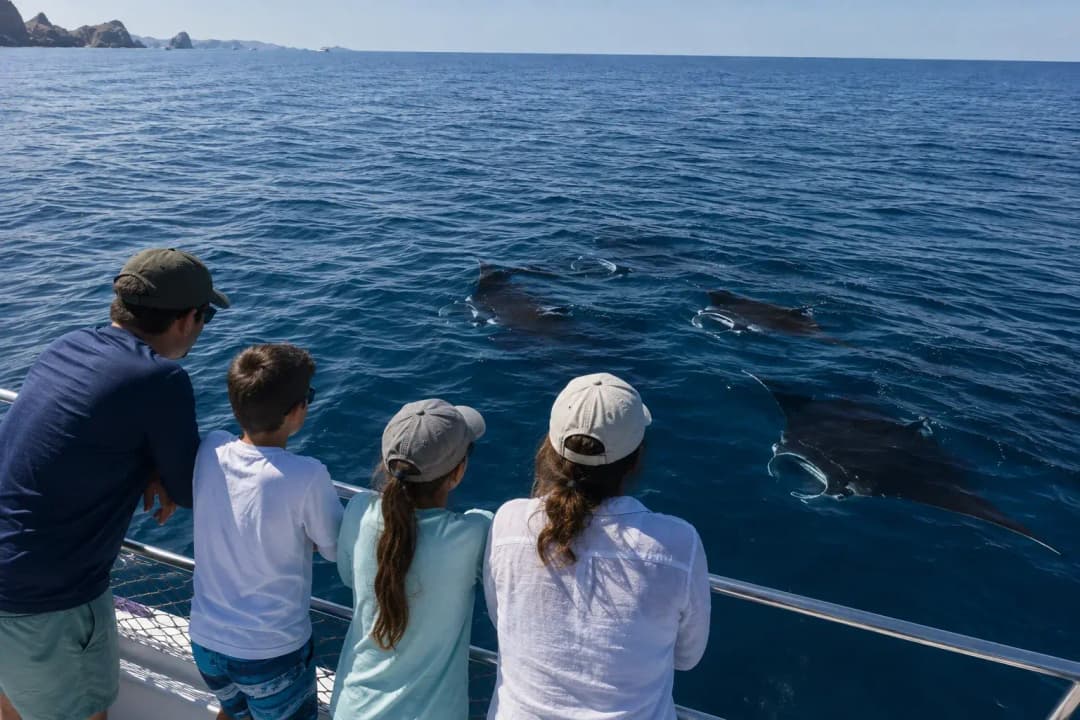
Watching the flying rays Mexico is famous for requires the right approach. You have two main options: watching from the deck or jumping in the water.
If you prefer to stay dry, booking a spacious yacht gives you an elevated vantage point. You can sip a cold drink while watching the horizon explode with leaping rays. It is one of the most relaxing, visually stunning family-friendly activities in Cabo.
If you want to get wet, pacing is everything. You cannot aggressively chase a fever of mobulas. If a boat speeds directly at them, they will immediately dive into the dark depths.
Our captains know how to read their trajectory. We position the boat ahead of their path, turn off the engines, and let you slip quietly into the water. If you float calmly, the massive fever will glide right past you. It is a surreal, completely silent experience.
Best Snorkeling Tours to See Mobula Rays in Cabo
To truly witness the devil rays cabo holds, you need a vessel that offers both comfort and agility. Crowded booze cruises simply cannot maneuver quietly enough to get you close.
For intimate, unhurried wildlife viewing, a private yacht charter is unmatched. Your captain controls the itinerary. If we spot a massive fever of rays a mile offshore, we can immediately pivot to intercept them.
If you want stability and a massive deck footprint, a private catamaran snorkeling trip is ideal. Catamarans sit lower to the water, giving you an incredible eye-level view of the jumping action.
For shorter trips closer to the marina, securing a Cabo catamaran snorkeling tour guarantees you hit the most active feeding zones. We frequently spot them while doing standard snorkeling near El Arco, as the intersecting currents around Land's End trap massive amounts of plankton.
The Sea of Cortez is waiting. The rays are jumping. Ready to witness the greatest marine show on earth? Reach out to Boat Trips Club today, and let’s get you on the water.