

History of Cabo San Lucas: From the Pericú People to a World-Famous Tourist Destination
Julia EvansJune 27, 2026Los Cabos
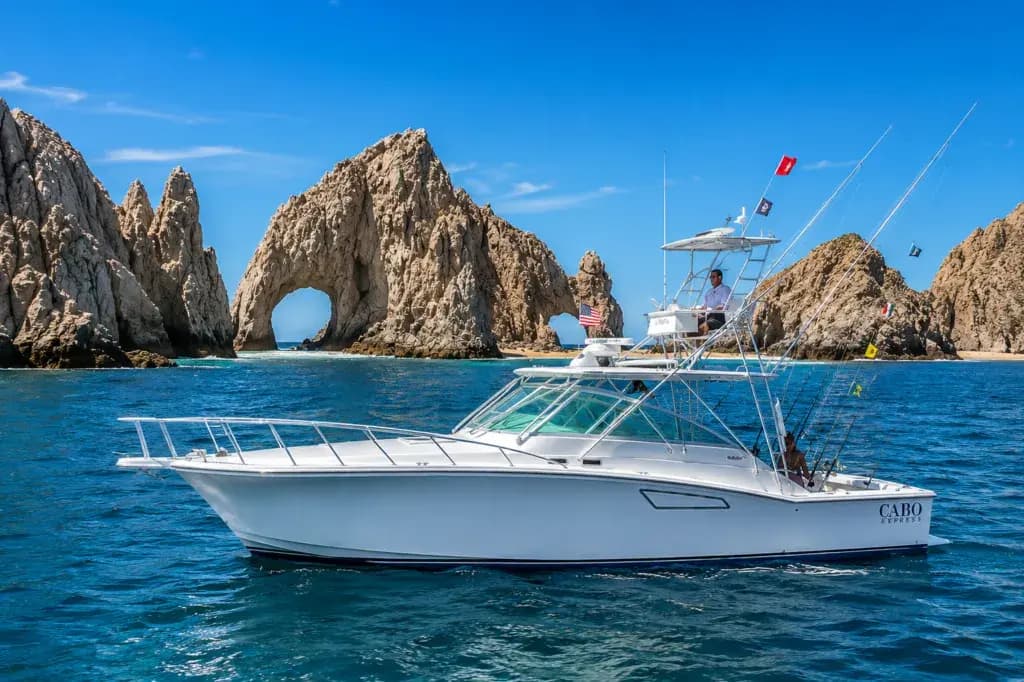
What is the history of Cabo San Lucas? The history of Cabo San Lucas spans four distinct eras. It began as a harsh coastal settlement for the indigenous Pericú hunter-gatherers, evolved into a strategic 16th-century ambush point for English pirates hunting Spanish Manila Galleons, transformed into an industrial tuna-canning village in 1927, and finally became an elite Hollywood sportfishing destination in the 1950s.
You likely know Cabo for the mega-yachts, the ice-cold margaritas, and the luxury resorts dotting the coastline. But strip away the concrete and the beach clubs, and the true history of this town is raw, sun-baked, and deeply tied to the violent moods of the ocean.
Long before the private jets started landing here, survival at the very tip of the Baja Peninsula required grit. The desert offered almost nothing. The ocean offered everything. If you want to understand how a completely isolated stretch of jagged granite became the peak of modern Mexican luxury, you have to look out at the water.
Here is the real, unvarnished story of how Cabo San Lucas transformed from an ancient indigenous outpost into the undisputed king of Baja California Sur maritime tourism.
The Original Inhabitants: The Pericú People of Baja California Sur
Look closely at the arid desert hills surrounding the marina today. It's hard to imagine living entirely off this land. Yet, for thousands of years, the Pericú people did exactly that.
The Pericú were the original masters of the Sea of Cortez. They didn't practice agriculture. The soil was far too dry, and rainfall was virtually non-existent. Instead, they survived as elite maritime hunter-gatherers. They built simple wooden rafts, armed themselves with wooden harpoons, and pushed out into the crushing Pacific currents to hunt sea turtles, fish, and marine mammals.
Their physical endurance was legendary. Historical records and archaeological findings documented by the National Institute of Anthropology and History (INAH) indicate the Pericú were exceptionally tall and heavily muscled compared to mainland indigenous groups. They were master free-divers. They routinely plunged into the deep, dark waters of the Gulf to harvest pearl oysters, holding their breath for agonizingly long stretches.
When you try to understand exactly where is Cabo San Lucas located, you realize just how isolated these tribes were. They were completely cut off from the rest of Mesoamerica by the brutal expanse of the Baja desert. This isolation bred resilience. They successfully fought off the harsh elements for centuries before the sails of Spanish ships finally appeared on the horizon.
Pirates, Galleons, and the Spanish Conquest
By the mid-1500s, the Spanish Empire had established the highly lucrative Manila Galleon trade route. Massive wooden ships heavily loaded with silk, porcelain, and spices sailed from the Philippines to Acapulco. But the journey took over six months. Scurvy, starvation, and dehydration decimated the crews.
They desperately needed a safe harbor to find fresh water before making the final run to mainland Mexico. The estuary at San José del Cabo provided that lifeline.
This creates the fundamental historical baseline for the modern Cabo San Lucas vs Los Cabos debate. San José del Cabo became the mission town—the place of fresh water and agriculture. Cabo San Lucas, just down the road, became something entirely different. It became a pirate's playground.
Where there is unprotected Spanish treasure, English and Dutch privateers inevitably follow. Legendary pirates like Thomas Cavendish realized that the Manila Galleons had to pass right by the tip of the Baja Peninsula. Cavendish famously ambushed the Santa Ana in 1587, stealing a fortune in gold and burning the Spanish ship to the waterline. The era of the pirates had officially begun.
Why the Arch of Cabo San Lucas Was the Ultimate Pirate Hideout
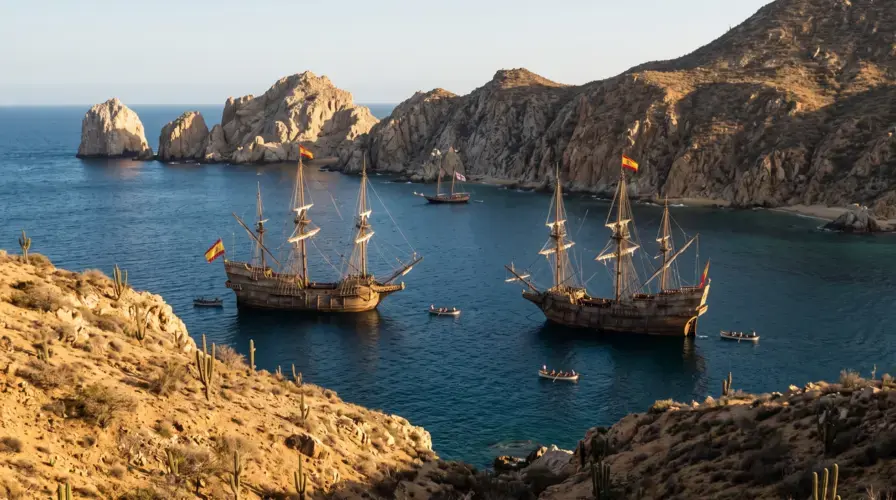
If you study the jagged rock formations at Land's End today, you can instantly see why pirates loved this specific spot. The famous Cabo San Lucas Arch (El Arco) wasn't just a pretty photo backdrop. It was a tactical military camouflage.
The towering granite walls hid the masts of pirate ships perfectly. Privateers would drop anchor on the calm Sea of Cortez side, waiting out the heavy trade winds that dictate the Cabo San Lucas weather in November. When a sluggish Spanish merchant ship rounded the cape, the pirates would strike fast, cornering them against the deadly Pacific reefs.
You can still feel that raw historical energy today. When you book a 32 ft private yacht cruise Cabo San Lucas to El Arco, ask your captain to kill the engines right near Pelican Rock. Listen to the water violently smashing against the limestone. You're floating in the exact spot where pirate cannons once echoed across the bay.
From a Sleepy Fishing Village to the Tuna Capital of the World
The pirates eventually left, and Cabo San Lucas reverted to a forgotten outpost for centuries. Only a handful of rugged fishermen and runaway sailors called it home.
Everything changed violently in 1927. A massive industrial cannery, the Compañía de Productos Marinos, opened its doors right on the edge of the bay. Almost overnight, Cabo transformed into an industrial boomtown. The waters here were absolutely boiling with yellowfin tuna. The cannery churned out thousands of cans a day, shipping them globally.
This facility physically birthed the modern layout of the town. The company built the first real roads, the first medical clinic, and a heavy wooden pier to load the cargo ships. The air constantly smelled of diesel fuel, boiling fish, and salt.
Today, that same industrial dirt patch is the heart of the luxury marina. When tourists ask about the best area to stay in Cabo San Lucas, they usually end up booking a resort built directly over the footprint of those old cannery worker camps.
The Eras of Cabo San Lucas: A Historical Timeline
Historical Era | Key Dates | Defining Events & Local Impact |
The Indigenous Era | 10,000 BC – 1530s | The Pericú people inhabit the extreme southern tip of the Baja Peninsula, surviving entirely via expert freediving and maritime hunting. |
The Pirate & Galleon Era | 1550s – 1700s | Spanish Manila Galleons use the cape for fresh water. English pirates use the Land's End rock formations to stage massive maritime ambushes. |
The Cannery Boom | 1927 – 1950s | Compañía de Productos Marinos establishes a massive tuna cannery, bringing the first permanent infrastructure, electricity, and jobs to the village. |
The Hollywood Era | 1950s – 1973 | Airstrips are carved into the dirt. Bing Crosby and John Wayne fly in for exclusive marlin fishing. The first luxury fly-in resorts (Hotel Cabo San Lucas) open. |
The Modern Mega-Marina | 1974 – Present | The Transpeninsular Highway opens. The marina is aggressively dredged to fit luxury yachts. Cabo explodes into a premier global tourist destination. |
The Hollywood Era: How Sportfishing Birthed Modern Cabo Tourism
By the 1950s, the tuna numbers began dropping, but a different kind of fish caught the world's attention: the Pacific Blue Marlin.
Word leaked out to Hollywood that monsters were swimming in the waters off the Baja coast. There were no paved roads. You couldn't drive here. The only way in was by boat or private plane. Dirt airstrips were quickly bulldozed into the desert scrub.
Suddenly, icons like Bing Crosby, John Wayne, and Ernest Hemingway were flying their private DC-3s down to the cape for weekend benders. They built highly exclusive, cash-only resorts perched on the cliffs. It was a lawless, deeply glamorous time. The incredibly rich biodiversity of this marine corridor—later recognized globally by the UNESCO World Heritage Centre—became the ultimate playground for the rich and famous.
They spent their days drinking tequila on wooden sportfishing boats and their nights trading stories around beach bonfires. It set the exact cultural tone that Cabo still sells today: exclusive, slightly wild, and deeply connected to the ocean.
If you are wondering, is Cabo San Lucas safe in 2027?, you can thank this era. The Mexican government realized the massive economic potential of these Hollywood dollars and began heavily investing in regional security and infrastructure to protect their new golden goose.
Cabo San Lucas Today: A Thriving Hub for Luxury Yachts and Marina Life
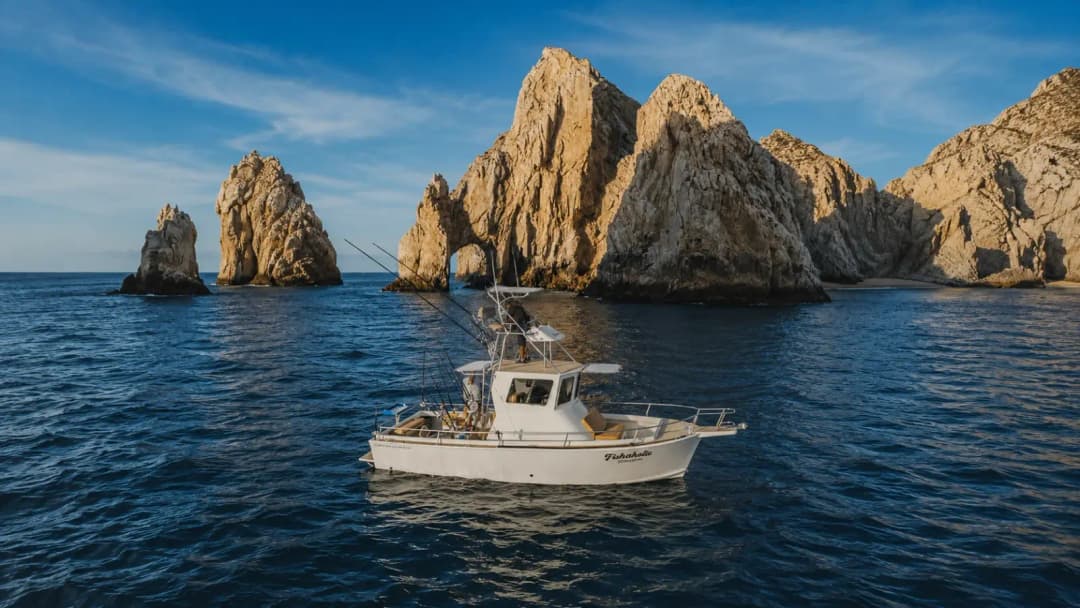
The absolute turning point happened in 1973 when the Transpeninsular Highway finally connected Cabo to the United States border. The isolation was broken. The government immediately began dredging the harbor, ripping out the old wooden cannery docks, and pouring concrete for a massive, modern marina.
The transition from a gritty fishing village to a luxury capital was complete.
Today, those rough wooden sportfishers have been replaced by multi-million dollar floating palaces. You don't have to be John Wayne to experience the high-life anymore. You can charter a Cabo luxury yacht Infinity 57 for the afternoon, complete with a private chef and open bar, anchoring in the exact same coves where pirates once hid.
The history of Cabo San Lucas isn't locked in a museum. It's out on the water. When you're planning your itinerary and looking for the best things to do in Cabo San Lucas, prioritize getting off the land.
If you're bringing the kids, searching for things to do in Cabo San Lucas for families usually starts right at the marina docks. But for the ultimate historical callback, book a Cabo San Lucas sunset catamaran cruise. As you sail past the Arch at twilight, watching the sky turn violently orange over the Pacific, you are seeing the exact same view the Pericú hunters watched thousands of years ago.
Our biggest piece of advice? Read up on our Cabo San Lucas travel tips before you arrive, respect the immense power of the ocean here, and take a moment to appreciate the wild history beneath the hull of your yacht. The pirates are gone, but the spirit of the Baja remains completely untamed.
Frequently Asked Questions About Cabo San Lucas History
Who originally lived in Cabo San Lucas before it was colonized?
The indigenous Pericú people were the original inhabitants of the southern Baja Peninsula. They were skilled hunter-gatherers and expert free-divers who survived off the rich marine life of the Sea of Cortez for thousands of years before the Spanish arrived.
Why is the Arch of Cabo San Lucas famous historically?
Aside from its geological beauty, the Arch (El Arco) at Land's End served as a strategic military hideout in the 16th and 17th centuries. English and Dutch pirates used the towering rock formations to completely hide their ships while waiting to ambush Spanish Manila Galleons carrying treasure.
When did Cabo become a tourist destination?
Cabo San Lucas first attracted elite tourism in the 1950s when Hollywood celebrities began flying private planes onto dirt airstrips to access the world-class marlin fishing. Mainstream tourism exploded later in 1974 after the completion of the Transpeninsular Highway and the dredging of the modern marina.
Are there historical sights left in Cabo San Lucas?
While Cabo lacks colonial architecture, the natural historical sights remain. The Arch and Pelican Rock are the primary historical landmarks. Additionally, the modern marina is built directly over the footprint of the 1927 tuna cannery that originally founded the town's economy.