


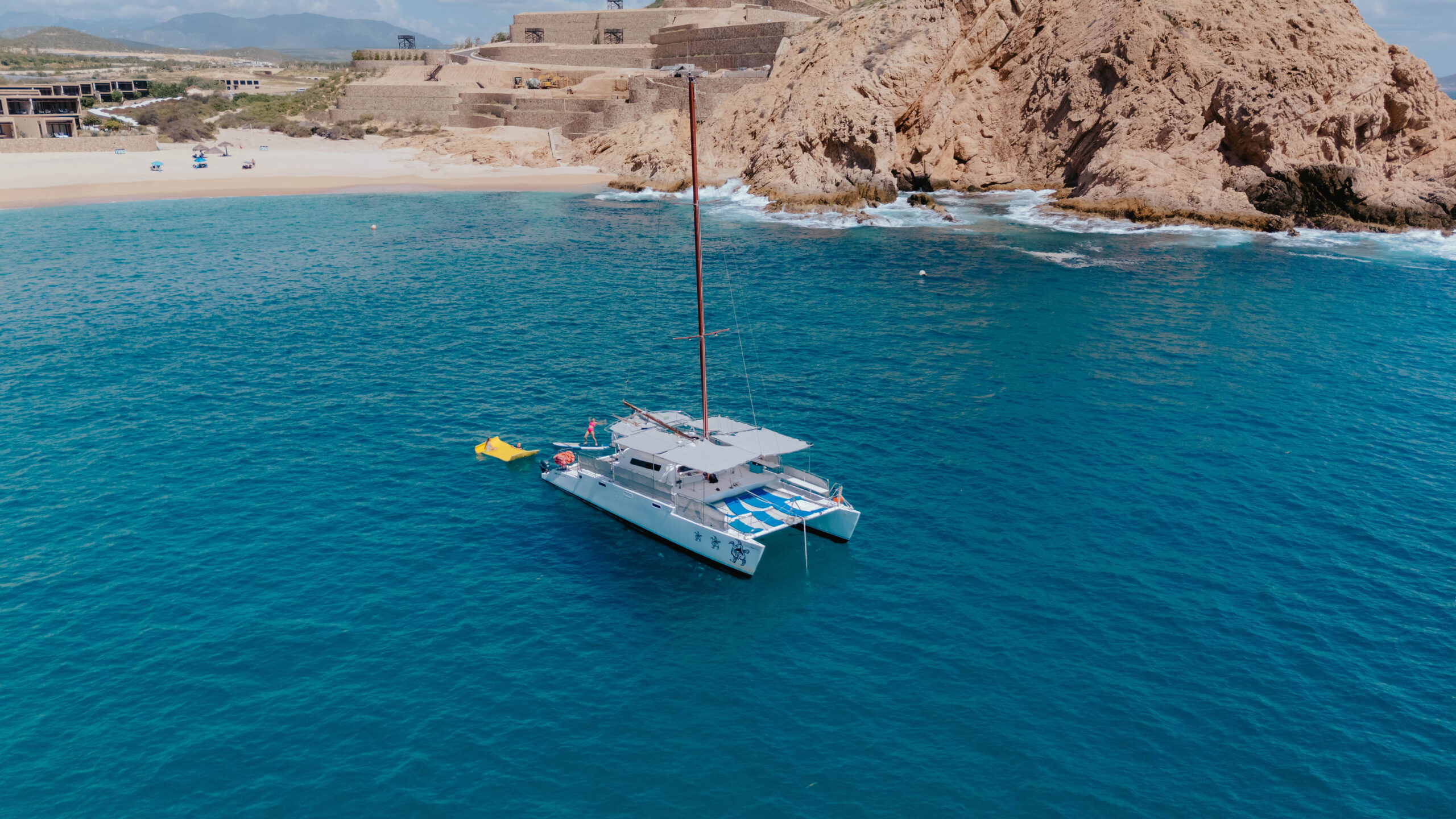

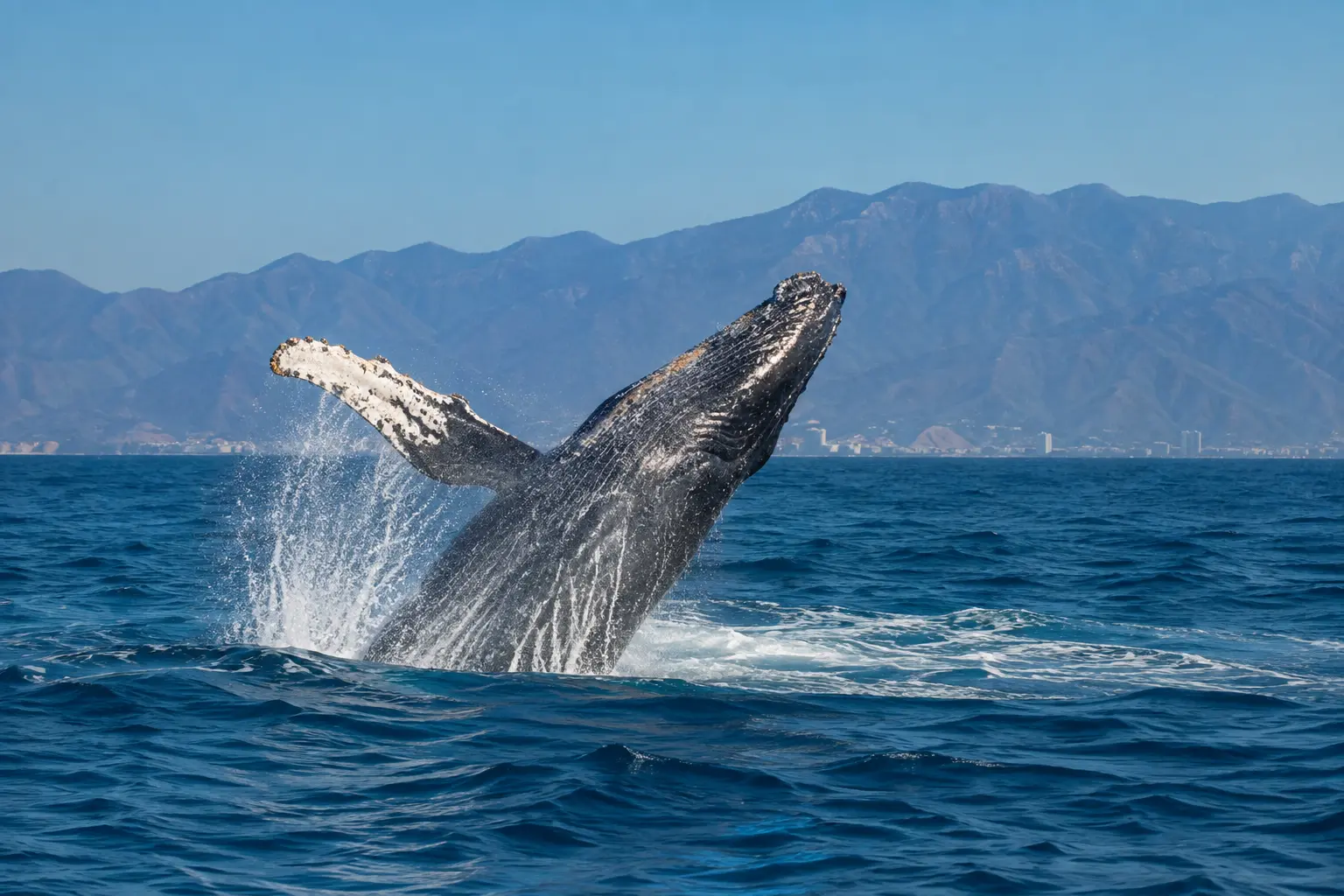
Puerto Vallarta whale watching season runs from mid-December through late March, when North Pacific humpback whales migrate into Banderas Bay to breed and calve. Peak sightings cluster in January and February. Boat Trips Club does not run a dedicated whale product, so travelers add whale watching to a private charter itinerary that already includes stops at Los Arcos or Marietas Islands.
Humpback whales return to Banderas Bay every winter to breed, calve, and sing. The whale watching season Puerto Vallarta is short, tightly defined, and one of the most reliable stretches of humpback activity in the eastern Pacific. Sightings are common from December through March, and peak activity concentrates in January and February.
The sections below cover the exact season dates, month-by-month behavior, why the bay works as a nursery, what to expect from a Boat Trips Club private charter that adds whale watching to its itinerary, and the federal rules that shape every encounter. You can also explore options to browse all private Puerto Vallarta charter itineraries before finalizing your day on the water.
When Is Puerto Vallarta Whale Watching Season?
Puerto Vallarta whale watching season officially runs from December 8 to March 23 each year. Federal Mexican wildlife authorities set that window under national whale-watching regulations, and it matches the humpback migration into Banderas Bay. Peak activity falls in January and February, when the majority of breeding pairs, singing males, and mother-and-calf duos are present. Late-season sightings taper into the first weeks of March as pods begin returning north to feeding grounds off Alaska and British Columbia.
Banderas Bay sits along the humpback superhighway between Arctic feeding waters and Mexican breeding waters. The bay’s warm winter temperatures, sheltered geometry, and deep central basin make it one of the most consistent humpback nurseries on the Pacific coast of Mexico. Charters departing La Cruz Marina and Marina Vallarta reach productive water within 20 to 30 minutes of leaving port during the December through March season. To review seasonal schedules and departure locations, you can view available charter departure dates.
Why Humpbacks Migrate to Banderas Bay
Banderas Bay is one of the largest bays in Mexico and the deepest along the Jalisco coast. Adult humpbacks travel thousands of kilometres from summer feeding grounds in Alaska, British Columbia, and the Bering Sea to reach the sheltered water off Puerto Vallarta. Females use the warm, calm bay to give birth and nurse newborns during the first weeks of life. Males use the same water as an amphitheatre for the long, patterned songs that carry through the winter breeding period.
According to NOAA Fisheries, the North Pacific humpback population was removed from the endangered list in 2016 after decades of recovery, and the Mexico distinct population segment continues to grow. That recovery is one reason sightings inside Banderas Bay have become so reliable during the December through March window. Captains report near-daily activity through the core months of January and February. You can explore luxury private boat options in Puerto Vallarta to plan your time in the bay.
Best Months to See Whales in Banderas Bay
January and February are the two strongest months for whale sightings in Banderas Bay. Sightings occur across the full December to March window, but activity density and behavior variety are highest in the middle of the season.
| Month | Humpback Activity | What You Are Likely to See |
| December | Season opening, arrivals building | Scouting adults, first pods, distant spouts |
| January | Peak breeding activity | Breaches, tail slaps, competitive male pods |
| February | Peak calving activity | Mothers with newborn calves, close surface behavior |
| March | Season winding down | Late calves, departing pods heading north |
Morning departures generally deliver flatter seas across all four months. Water inside Banderas Bay is at its calmest between roughly 8 a.m. and 11 a.m., which is why most captains prefer whale-focused itineraries to leave the marina early. To secure early morning departure slots during the peak Puerto Vallarta whale watching season, you can view puerto vallarta sailing adventures and reserve online.
What Whale Behaviors You’ll See From a Charter
Humpbacks in Banderas Bay display the full breeding-season behavior repertoire. From a private charter deck, common surface behaviors include:
- Blows and spouts, the visible exhale that first signals a whale
- Fluke-up dives, when the tail rises before a deep descent
- Breaches, the full body launch out of the water
- Pectoral slaps and tail lobs, part of male competition displays
- Mother-and-calf pairs resting near the surface
Underwater microphones sometimes reveal the songs of male humpbacks, which can last several minutes and repeat for hours. Captains follow federal distance rules, so most sightings begin at a legal buffer. Whales often close that distance on their own once the engine is off, and drifting silently is the fastest way to bring a curious animal alongside during the Puerto Vallarta whale watching season. You can check private catamaran charter itineraries to see vessels with ideal viewing platforms.
How Boat Trips Club Charters Include Whale Watching
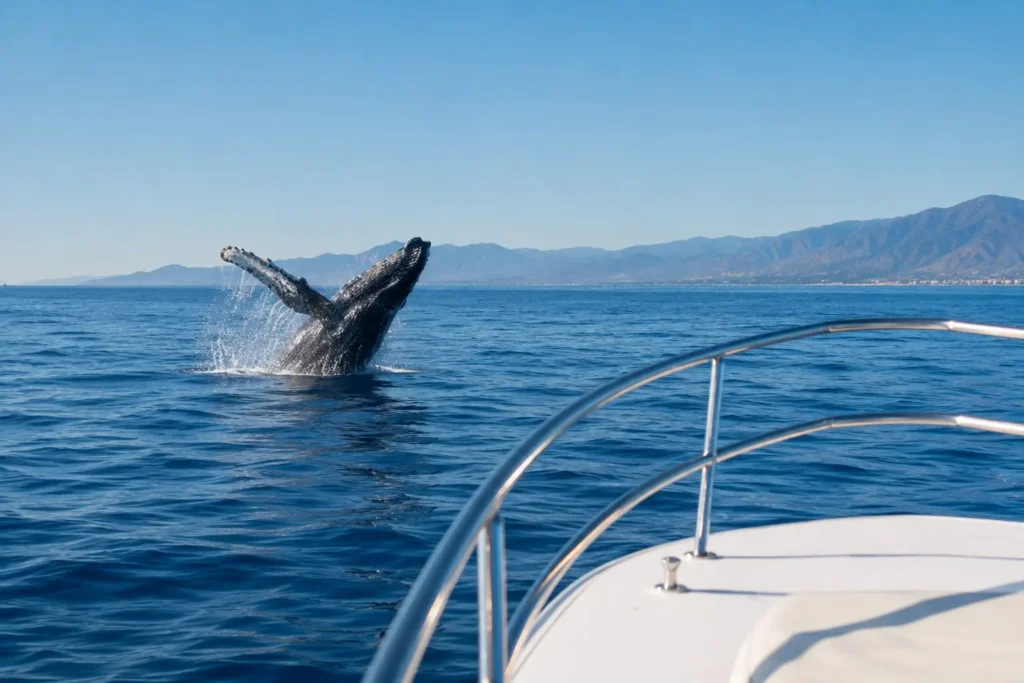
Boat Trips Club does not operate a dedicated whale watching tour in Puerto Vallarta. Instead, the private yacht and catamaran fleet can weave whale watching into an existing itinerary during the December through March window. A charter departing Marina Vallarta or La Cruz Marina can slow down and drift when whales appear, then continue on to a snorkeling stop at Los Arcos Marine Park or a beach anchor along Punta Mita.
Two charters that work especially well as whale-adjacent trips are The Reel Escape Private 44ft Yacht Charter, a 44ft yacht departing Marina Vallarta on flexible 4-hour to 8-hour itineraries, and the Private 56ft Sailing Catamaran Charter leaving from La Cruz Marina. Both cross the same bay water where humpbacks concentrate. You can also review options for a Private 48ft Trimaran Charter in Puerto Vallarta to enjoy expansive deck space during sightings.
Where in Banderas Bay to Watch for Whales
Sightings cluster in three zones inside Banderas Bay. The mouth of the bay, along the Punta Mita headland and the outer approach to Marietas Islands, is the busiest corridor because whales enter and exit there. The central bay, running between Los Arcos Marine Park and the Marietas archipelago, delivers frequent close encounters because whales linger and rest in the deeper mid-bay water. The northern shelf near La Cruz de Huanacaxtle holds mothers with young calves that prefer calmer, shallower water.
Charters running from La Cruz Marina reach the northern shelf fastest. Charters from Marina Vallarta cross the central bay on the way to Los Arcos and Yelapa. Both corridors deliver sightings across a normal December to March charter, and captains adjust course when spouts appear on the horizon. That flexibility is one reason a private charter outperforms a fixed-route group tour during the Puerto Vallarta whale watching season. You can also book a private sunset cruise to enhance your Puerto Vallarta trip.
Whale Watching Regulations Every Charter Follows
Mexican federal regulations govern every whale watching interaction inside Banderas Bay. The rules, set by SEMARNAT under NOM-131-SEMARNAT-2010, require boats to keep a legal buffer distance of 60 meters (about 197 feet) from whales for non-authorized vessels, and 240 meters (about 787 feet) for boats with mother-and-calf pairs. Only a limited number of licensed operators can approach whales at closer distances (up to 30 meters). Non-licensed charters, which includes most private yacht and catamaran hires, observe from the standard buffer.
That distance is not a limitation on the experience during the Puerto Vallarta whale watching season. Humpbacks in Banderas Bay routinely surface, breach, and travel closer than the legal buffer on their own, and captains cut engines and drift when a whale approaches. Boat Trips Club charter captains follow the buffer strictly, both because federal enforcement is active during whale season and because the whales stay in the bay longer when they are not chased. Feel free to learn more about customized private charter sailing trips operating safely under local marine guidelines.
Combining Whales With Marietas or Los Arcos
A whale-season charter pairs naturally with a Marietas Islands National Park or Los Arcos Marine Park itinerary. The Marietas archipelago sits at the western mouth of Banderas Bay, west of Punta Mita, and the transit crosses the bay’s most productive humpback zone. A snorkel stop at the Marietas gives you volcanic sea caves, tunnel arches, and blue-footed booby colonies alongside the possibility of hearing humpback song underwater during peak season.
Los Arcos Marine Park, a set of granite pinnacles south of Marina Vallarta, sits in the central bay corridor. Charters heading to Los Arcos for snorkeling regularly log whale sightings on the outbound and return legs. Half-day options like a Private Sunset Catamaran Cruise in Puerto Vallarta also cross prime whale water during the December through March window.
What to Bring on a Whale-Season Charter
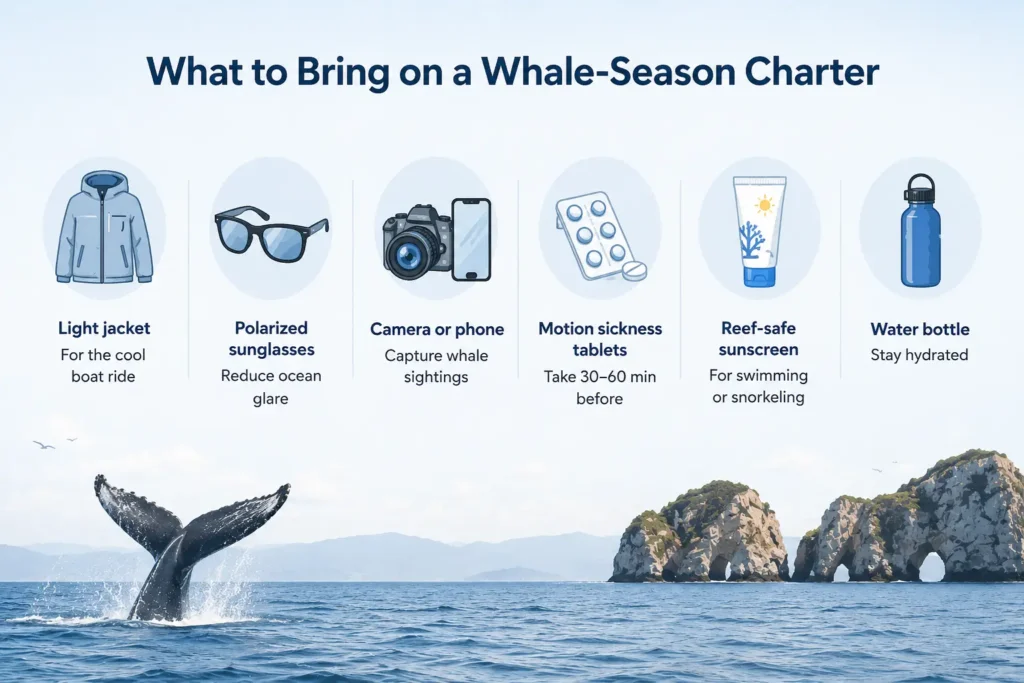
Cooler, drier morning air on Banderas Bay in January and February is the main reason to pack differently than a summer charter. Recommended items:
- A windbreaker or lightweight fleece for the outbound run
- Polarized sunglasses to cut glare and see subsurface whales
- A camera with a zoom lens, or a phone with digital zoom
- Motion sickness tablets taken 30 to 60 minutes before departure
- Reef-safe sunscreen if you plan to swim at a later snorkel stop
- A refillable water bottle
Charter inclusions vary by boat. Most Boat Trips Club private charters include drinks, snacks, snorkeling equipment, paddleboards, and captain and crew. Some larger catamarans add open bars and lunch, and a few include breakfast. You can review detailed boat inclusions across our Puerto Vallarta fleet before finalizing your selection.
Planning Your Puerto Vallarta Day on the Water
The whale watching season Puerto Vallarta Mexico transforms a routine bay cruise in Puerto Vallarta into something closer to a working expedition. Book your charter for January or February if humpbacks are your priority, and choose a departure from La Cruz Marina or Marina Vallarta that gives the captain room to slow for sightings. A four-hour private charter is usually enough time to combine one snorkel stop with one or two productive whale drifts, and a six-hour Marietas itinerary layers whale-watching over the busiest corridor at the mouth of the bay. You can explore 4-hour to 8-hour charter choices to find the ideal balance for your group.
Making the Most of Your Puerto Vallarta Trip
Whether it’s your first visit or a return trip, a little planning goes a long way in Puerto Vallarta. When you’re ready to get out on the water during the Puerto Vallarta whale watching season, you can connect directly with local charter coordinators to match your group size with available vessels and custom route options.
Book a Private Charter in Puerto Vallarta
To build whale watching into a full Banderas Bay charter during peak season, you can explore the Private 34ft Sailing Catamaran Charter, which leaves La Cruz Marina with a four-hour window, open bar, breakfast, lunch, snorkeling gear, and paddleboards included. Chat with us on WhatsApp. Message Boat Trips Club at +1 888-832-4893 with questions or to lock in your dates.
Final Thoughts
In winter, enjoy a private marine excursion in Banderas Bay, to combine a day of world-class marine wildlife viewing with a luxurious day on the water. Knowing the ins and outs of the Puerto Vallarta whale watching season helps you to choose the best time, marina and vessel itinerary to increase your chances of leisurely humpback encounters. Your day on Banderas Bay is a memorable combination of adventure and comfort thanks to flexible sailing schedules and expert captains who respect official conservation buffers. When you are ready to outline your custom route, you can explore all Puerto Vallarta charter excursions to create an unforgettable experience on the bay.
Frequently Asked Questions
When does whale watching season start in Puerto Vallarta?
Puerto Vallarta whale watching season officially runs from December 8 to March 23 each year, set by Mexican federal wildlife regulations. Sightings inside Banderas Bay start building in mid-December and peak through January and February.
Can you see whales from Puerto Vallarta beach?
Yes, spouts and breaches are sometimes visible from Los Muertos beach, the Malecón, and the Punta Mita shoreline during December through March. Sightings from a charter on Banderas Bay during the Puerto Vallarta whale watching season are far more consistent because whales rest and travel in the deeper central and western bay water.
Which months are best for whale watching in Banderas Bay?
January and February are the two strongest months for humpback whale sightings in Banderas Bay. December is early season with arrivals still building, and March offers late-season mother-and-calf sightings before pods return north to feeding grounds.
Are there dedicated whale watching tours from Puerto Vallarta?
Boat Trips Club does not offer a dedicated whale watching product. Private yacht and catamaran charters can build whale watching into an existing itinerary during the December through March season, usually alongside a snorkel stop at Los Arcos Marine Park or Marietas Islands National Park.
How close can boats get to whales in Banderas Bay?
Non-licensed charters must observe a legal buffer distance from a single whale (60 meters), and a larger buffer from a mother-and-calf pair (240 meters), under NOM-131-SEMARNAT-2010. Captains cut engines when whales approach, and the animals often close the distance on their own.