
The Dominican Republic Flag | Meaning, History, and Colors Explained
Julia EvansApril 2, 2026Punta Cana
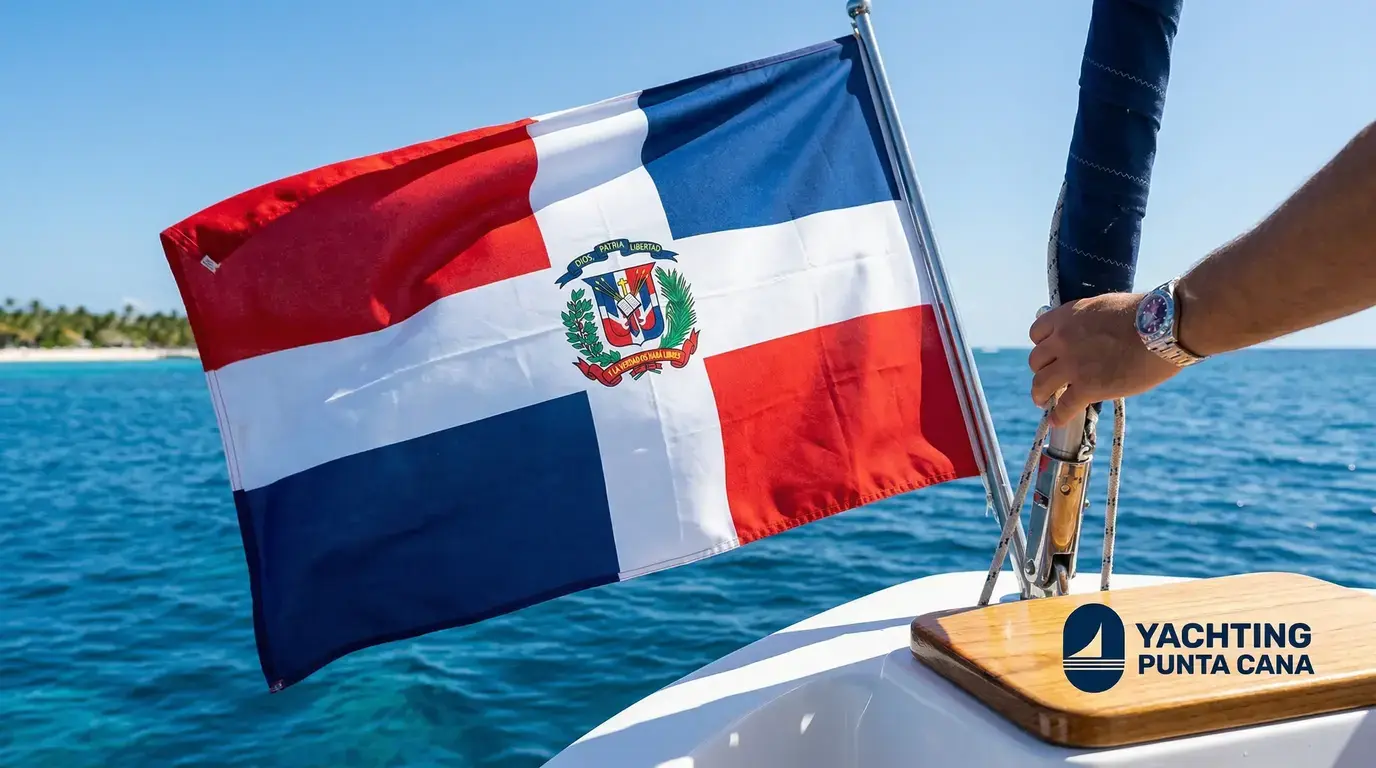
Spotting the Dominican Republic flag fluttering against a clear Caribbean sky evokes immediate national pride. But what does it actually represent? The Dominican Republic flag stands entirely alone globally as the only national banner featuring an open Bible. Designed by visionaries in 1838 and officially adopted in 1844, this vibrant emblem utilizes ultramarine blue for liberty, vermilion red for the blood of heroes, and a distinct white cross representing peace and salvation. Want the unfiltered history behind the Escudo and those striking colors? We’ve got the exact answers.
What Do the Colors of the Dominican Republic Flag Mean?
Ultramarine Blue (Liberty & Skies)
Look up on a clear morning in Punta Cana. That deep, endless blue is exactly what the flag’s upper left and lower right quadrants aim to capture. Ultramarine blue represents the expansive skies above the island and the divine protection of the nation. It also serves as a fierce declaration of liberty. For the founders, blue wasn’t just a design choice. It represented the ultimate goal of a free, self-governing people living without foreign intervention.Vermilion Red (The Blood of Heroes)
Freedom is rarely free. The vermilion red quadrants—positioned on the upper right and lower left—serve as a stark reminder of the cost of independence. This deep red specifically honors the blood spilled by the heroes of 1844. Patriots fought relentlessly to secure the nation’s borders and establish an independent state. When the wind snaps the heavy fabric of the flag, that flash of red demands respect for those sacrifices.The White Cross (Salvation & Peace)
Anchoring the entire design is a massive, symmetrical white cross. This element divides the blue and red quadrants, providing stark visual contrast. White universally symbolizes peace, but here, the cross itself highlights the deep Catholic roots of the nation. It represents the salvation of the people. It reminds citizens that faith and peace must bind the republic together.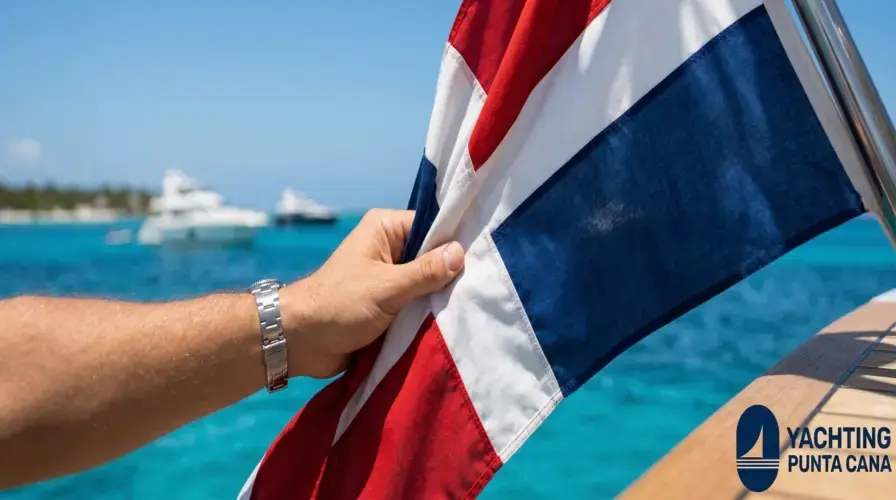
The Dominican Coat of Arms: A Unique Global Symbol
The Motto: "Dios, Patria, Libertad"
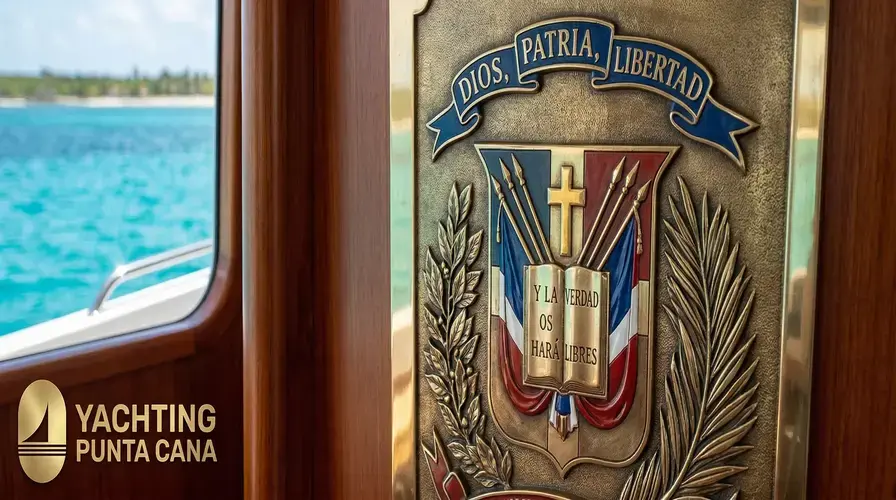
Look closely at the blue ribbon resting above the shield. You’ll read the words “Dios, Patria, Libertad.” Translated, this means God, Homeland, Liberty. These three words form the foundational philosophy of the Dominican Republic. Based on our industry experience living and operating here, you hear this intense pride echoed in daily local interactions. It’s more than a motto; it’s a way of life.The Open Bible (John 8:32)
Here sits the most unique feature of the Dominican flag. It is the only national flag on Earth to incorporate the Holy Bible.- The book is specifically open to the Gospel of John, chapter 8, verse 32.
- The verse reads: “Y la verdad os hará libres” (And the truth shall make you free).
- Six spears, two of them holding Dominican flags, proudly guard the Bible and the gold cross above it.
- A green bay laurel branch sits on the left (immortality), and a palm frond rests on the right (liberty), according to the official historical records from the Ministry of Foreign Affairs.
The History: Who Designed the Dominican Flag?
Juan Pablo Duarte and "La Trinitaria"
In 1838, a young visionary named Juan Pablo Duarte decided enough was enough. The island was under Haitian rule, and Duarte craved an independent Dominican state. He formed a secret society called La Trinitaria. Operating in the shadows, they organized resistance, spread revolutionary ideas, and planned for a sovereign future. Duarte himself conceptualized the initial design of the flag, adding the white cross to the existing Haitian flag to signify a new, distinct, and faithful nation.The Seamstresses: Concepción Bona and María Trinidad Sánchez
Ideas need execution. While Duarte brought the vision, two courageous women brought the flag into physical reality. Concepción Bona and María Trinidad Sánchez tirelessly sewed the very first Dominican flag. Imagine the tension in the room, working secretly with heavy fabrics, knowing the finished product would be the banner of a massive revolution. Their brave, tactile work culminated on February 27, 1844, when the flag was finally hoisted, marking the official birth of the Dominican Republic.