


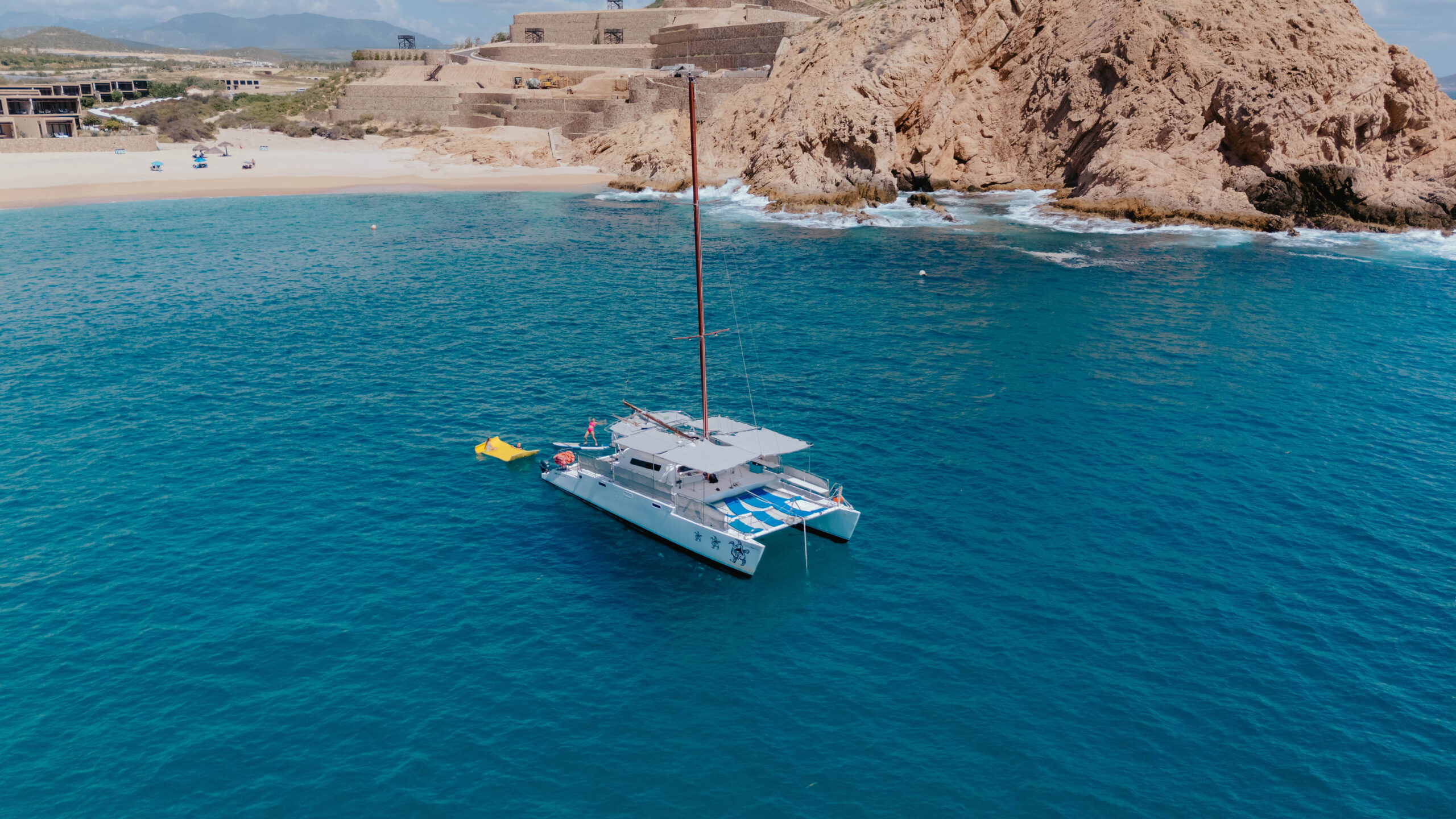


Costa Rica fun facts start with the numbers: the country holds roughly 5% of the world’s biodiversity on just 0.03% of Earth’s land. Costa Rica abolished its army in 1948, touches both the Pacific Ocean and the Caribbean Sea, and produces nearly 100% renewable electricity. Boat Trips Club runs catamaran, yacht, and sportfishing charters from Playa Flamingo and Papagayo on the Pacific coast.
Costa Rica is small, biodiverse, peaceful, and volcanic — and most of what makes it interesting is measurable. What follows is a working set of Costa Rica fun facts organized by culture, wildlife, geography, coast, and travel logistics, so the trivia actually helps you plan a trip.
Costa Rica Quick Facts: The Essentials
Costa Rica is a 51,100-square-kilometer country in Central America bordered by Nicaragua, Panama, the Pacific Ocean, and the Caribbean Sea. The capital is San José, the population is roughly 5 million, and the currency is the Costa Rican colón. The country declared independence from Spain in 1821 and abolished its standing army in 1948. Residents call themselves ticos and greet the day with the phrase “pura vida,” which translates literally to “pure life.”
Guanacaste, the northwestern province facing the Pacific, is where most beach tourism happens. Playa Flamingo, Papagayo, and Tamarindo all sit along this coastline. The Central Pacific — home to Jacó, Herradura Beach, and the Manuel Antonio coast near Quepos — anchors the second big boating region. Exploring the best spots in Costa Rica often starts right along these vibrant coastlines.
Cultural Facts: Pura Vida, Peace, and the Tico Way of Life
Costa Rica has had no standing army since December 1, 1948, when President José Figueres Ferrer abolished it after the civil war. The savings were redirected into education and healthcare, and December 1 is now celebrated as Military Abolition Day. Literacy rates hover around 98%, and healthcare is universal.
“Pura vida” is more than a slogan. Ticos use it as a greeting, a farewell, a thank-you, and an answer to “how are you?” The phrase reflects the national attitude toward stress: fewer meetings, longer lunches, and a stubborn refusal to hurry. The Nicoya Peninsula sits on the Pacific side of Guanacaste. It is one of five recognized Blue Zones — regions where people live measurably longer than the global average.
Coffee is the other cultural pillar. Costa Rica grew its first commercial coffee crop in the 1820s, and by law only 100% Arabica beans may be cultivated in the country. Bananas and pineapples later joined coffee as the country’s biggest agricultural exports.
If you want to sample the Guanacaste coast on a low-commitment schedule, choosing a private catamaran cruise in Playa Flamingo provides a 4-hour morning sail with snorkeling gear, an open bar, paddleboards, double kayaks, and a gourmet meal served right on board.
Wildlife Facts: Sloths, Quetzals, and 5% of the Planet’s Biodiversity
When looking at interesting facts about Costa Rica, the country’s nature stands out immediately. The exact Costa Rica biodiversity percentage sits at roughly 5% of the world’s known species on just 0.03% of the planet’s surface area. That includes more than 900 bird species, 250 mammal species, 175 amphibian species, and an estimated 300,000+ insect species. Two species of sloth — the brown-throated three-toed and Hoffmann’s two-toed — live across the country’s forests. The clay-colored thrush (yigüirro) serves as the official Costa Rica national animal bird symbol, valued for its distinctive song that signals the coming rainy season.
The resplendent quetzal, the scarlet macaw, and the toucan are among the most photographed birds. Costa Rica hosts an estimated 10% of the world’s butterfly species. All six sea-turtle species that visit the eastern Pacific — including olive ridleys and leatherbacks — nest on Costa Rican beaches, with mass-nesting events occurring at Ostional and Playa Nancite.
Marine life on the Pacific side is just as dense. Humpback whales pass through twice a year, with sightings peaking from July to October and again from December to March. Watching Costa Rica dolphins along the shore offers year-round views of spinner and bottlenose pods. Sailfish and marlin populate the offshore waters, which is why the Central Pacific and Papagayo coasts are two of the most respected sport-fishing regions anywhere. According to Wikipedia, roughly 25% of the country’s territory is designated as protected land or national reserves.
Geography Facts: Two Oceans, Volcanoes, and Rain Forests
Costa Rica is one of only a handful of countries with coastlines on two different oceans — the Pacific to the west and the Caribbean to the east. The Pacific coastline runs roughly 1,290 kilometers; the Caribbean coastline is far shorter at about 212 kilometers. The country sits directly on the Pacific Ring of Fire, which produced its more than 60 volcanic formations. Six volcanoes are currently classified as active: Arenal, Poás, Irazú, Turrialba, Rincón de la Vieja, and Miravalles. Learning these Costa Rica fun facts helps illustrate why the country has such varied landscapes.
Irazú, at 3,432 meters, is the highest volcano in the country. On a clear day, you can see both the Pacific and the Caribbean from its summit. The Gulf of Papagayo sits on the northern Pacific coast. It is a deep-water inlet lined with secluded beaches like Playa Nacascolo and Playa Huevos, many of which are only reachable by boat.
Rainforest, cloud forest, mangrove, and dry tropical forest all exist within Costa Rica, sometimes within the same afternoon’s drive. The country contains 12 distinct climate zones by some ecological classifications. Understanding the regional weather patterns makes finding the best time to visit Costa Rica essential for outdoor plans.
For groups who want to see this coastline up close, booking a sunset catamaran cruise in Playa Flamingo offers a 4-hour afternoon journey complete with snorkeling equipment, fresh fruit, alcoholic drinks, snacks, and dinner.
Cool Facts About Costa Rica for Travelers
Costa Rica generates more than 99% of its electricity from renewable sources in most years — hydro, geothermal, wind, and solar. In several recent years, the national grid has run on 100% renewables for over 300 consecutive days. These sustainable energy achievements stand out as impressive Costa Rica fun facts for eco-conscious visitors. The country has pledged to be carbon-neutral by 2050.
The name “Costa Rica” translates to “Rich Coast.” Columbus is credited with the phrase after his 1502 landing near present-day Limón. Ironically, the country had less gold than the Spanish hoped. It remained a rural backwater during the colonial era, and later developed a more egalitarian social structure than its neighbors.
Cocos Island, 550 kilometers off the Pacific coast, is a UNESCO World Heritage Site and one of the top scuba destinations in the world. Cocos was Michael Crichton’s inspiration for Isla Nublar in Jurassic Park. Closer to shore, Tortuga Island (Isla Tortuga) off the Central Pacific is a popular boat-trip destination reachable from Los Sueños Marina, Herradura Beach, and Quepos.
A useful travel note: Costa Rica has no daylight saving time and sits in Central Standard Time year-round.
Unique Facts About the Costa Rica Coast

The Guanacaste and Central Pacific coasts of Costa Rica are internationally known for offshore sportfishing. The waters near Playa Flamingo and Papagayo produce sailfish, marlin, tuna, and roosterfish through the year. Peak sailfish season on the Pacific runs from May through September, while marlin runs stronger from August through October.
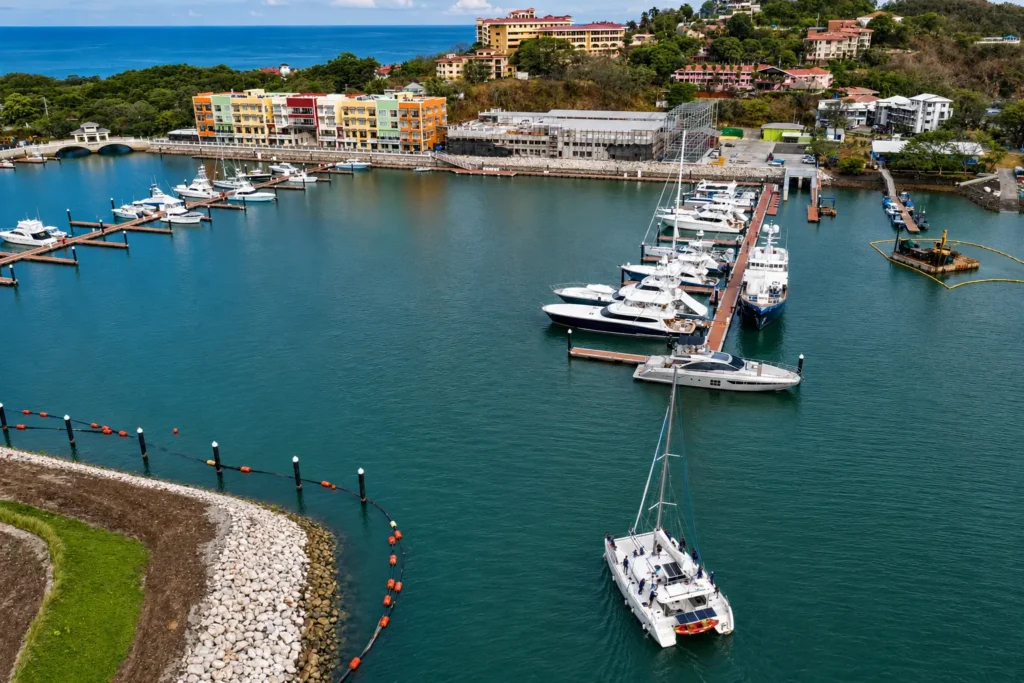
Marina Papagayo and Los Sueños Marina are the two largest full-service marinas on the Pacific side, with Flamingo Marina serving as the northern hub. Half-day trips typically run 4 to 5 hours; full-day charters run 8 hours. Travelers looking for exciting things to do in Guanacaste Costa Rica often reserve a half-day private fishing charter in Playa Flamingo to experience a 5-hour targeted offshore excursion with professional gear included.
Anglers seeking specific target species often choose specialized Guanacaste boat tours like a 35 ft sportfishing charter in Papagayo, focusing on marlin and roosterfish across a dedicated 5-hour charter window. These experiences feature prominently among top Costa Rica fun facts for outdoor enthusiasts.
Turning Costa Rica Facts Into a Day on the Water
Costa Rica’s fun facts turn from trivia into a trip the moment you step onto a boat. The two-ocean geography, sailfish waters, and volcanic coastline are best experienced from the deck of a boat. The secluded beaches around the Gulf of Papagayo are especially good on a catamaran or sportfisher. Taking advantage of local Costa Rica fun facts makes organizing your days on the Pacific coast effortless. Playa Flamingo, Papagayo, and Jacó are the three departure regions where most of that action happens.
Making the Most of Your Costa Rica Trip
Whether it’s your first visit or a return trip, a little planning goes a long way in Costa Rica. When you’re ready to get out on the water, the Boat Trips Club team is happy to help you find the right option for your group and answer any questions before you go.
Book a Catamaran Cruise or Fishing Charter in Costa Rica
Boat Trips Club runs catamaran, yacht, and sportfishing charters — both private and shared — out of Playa Flamingo, Papagayo, Jacó, and Quepos. Shared four-hour catamaran sails from Flamingo Marina are the easiest way to see the Guanacaste coast. Full-day private catamarans, luxury yachts, and offshore fishing charters give bigger groups more range. Check the full lineup on the Costa Rica destination hub, or contact the team for planning help.
Ready to explore Costa Rica’s coastline by catamaran, yacht, or fishing charter?
Final Thoughts
Costa Rica is a destination where impressive natural statistics meet real-world adventure. From its army-free history and renewable energy achievements to its unmatched biodiversity, the country offers unique experiences at every turn. Exploring the volcanic coastlines, pristine waters, and secluded beaches of Guanacaste and the Central Pacific provides an unforgettable way to see these facts come to life. Whether you are snorkeling alongside vibrant marine life or fishing offshore, experiencing the shoreline by boat unlocks the absolute best of the Pura Vida lifestyle.
Frequently Asked Questions
What is Costa Rica most famous for?
Costa Rica is most famous for its biodiversity, its “pura vida” culture, and for having no standing army since 1948. It is also known for two-ocean coastlines, active volcanoes, and internationally recognized sportfishing on the Pacific side.
How many volcanoes does Costa Rica have?
Costa Rica has more than 60 volcanic formations, of which six are classified as currently active: Arenal, Poás, Irazú, Turrialba, Rincón de la Vieja, and Miravalles. Irazú is the tallest at 3,432 meters.
Why does Costa Rica have no army?
Costa Rica abolished its standing military on December 1, 1948, following the civil war. President José Figueres Ferrer redirected the defense budget into education and healthcare. December 1 is now observed nationally as Military Abolition Day.
What percentage of Costa Rica’s electricity is renewable?
Costa Rica generates more than 99% of its electricity from renewable sources in most recent years, drawing from hydroelectric, geothermal, wind, and solar power. The country has pledged carbon neutrality by 2050.
What does “pura vida” mean?
“Pura vida” translates literally as “pure life.” Costa Ricans use it as a greeting, a farewell, a thank-you, and a general affirmation. The phrase captures the national attitude of contentment, patience, and low-pressure daily rhythm.
Where do most boat tours in Costa Rica depart from?
Most Pacific-side boat tours depart from Flamingo Marina in Guanacaste, Marina Papagayo in the north, and Los Sueños Marina near Herradura Beach on the Central Pacific. Playa Flamingo is the busiest hub for catamaran and sportfishing charters.